In early 2019, my life was falling apart. I was in the middle of a divorce, and alcohol had a grip on me that had grown completely out of my control over the previous few years. I'd lost friends. I'd put family members at odds with each other. I was starting to believe there was no path left to a life worth living.
That despair led me to a place I'm not proud of — I drove my car into a telephone pole at 60 miles an hour, trying to end the pain for good. Instead, I was given grace and a second chance I didn't see coming.
After police found me, I was moved from Santa Cruz to a rehab facility in Orange County, where I spent the next nine months — and honestly, the rest of my life since — rebuilding my mind, body, and spirit from the ground up.
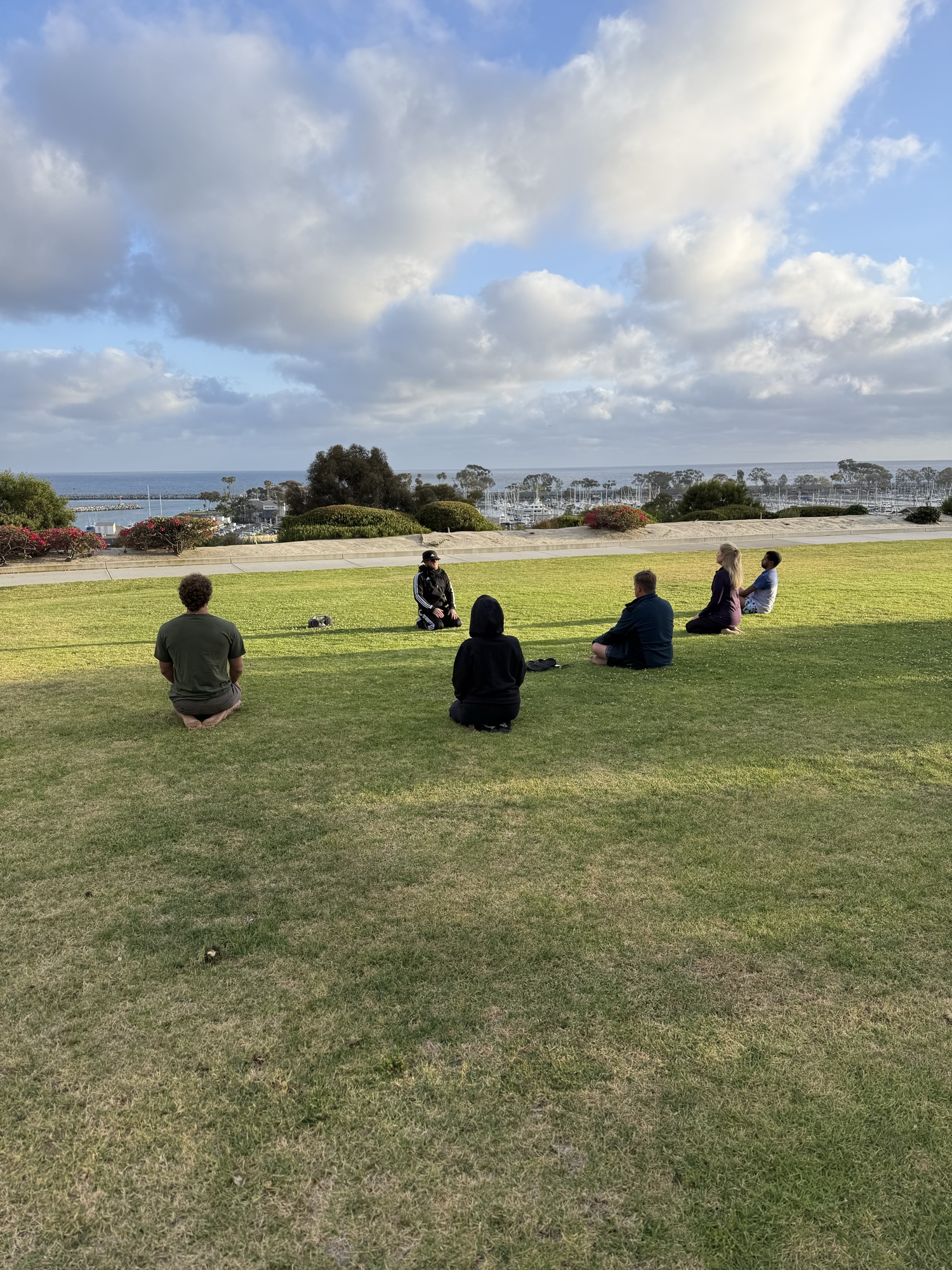
My recovery started with meditation and deep breathing, and that reignited a love for martial arts I'd carried since I was a kid. Dusting off those old skills and revisiting that practice is what slowly turned me into who I am today — someone who now teaches others to use the same tools of movement and breath to take their lives back.
Martial arts gave me a sense of purpose, discipline, and inner strength right when I needed all three most. It gave me something to push against on the days when pushing back against my own head felt impossible, and it put me on a path of recovery I'm still walking.
Through consistent practice, my relationship with my own mind changed. I'm more focused now, more resilient, more in control of how I respond to things. Training became a form of expression and release for me — a way to channel energy somewhere constructive instead of somewhere destructive. Folding physical fitness into my daily routine didn't just build my body. It sharpened my thinking and gave me more clarity and steadiness to work with as I navigated recovery.
Martial arts training is one piece of a broader picture of movement supporting brain health and recovery. [Research indicates](https://www.ncbi.nlm.nih.gov/pmc/articles/PMC5809487/) that martial arts practice stimulates the release of endorphins, dopamine, and serotonin — neurotransmitters tied to mood regulation and overall wellbeing. For anyone working through recovery from substance use, those natural chemical shifts can support the broader work of restoring a brain chemistry that's been disrupted.
Training also supports neuroplasticity — the brain's ability to adapt and reorganize itself over time. That matters for developing brains and for brains in recovery alike, since it plays into cognitive function, memory, and emotional regulation. Dance works on the body and mind in a similar way, and martial arts shares that quality — it demands coordination, spatial awareness, and creative problem-solving, all of which engage different regions of the brain and build cognitive flexibility.
Regular physical fitness — cardio, strength training, and practices like yoga — supports that same picture. Exercise increases blood flow to the brain, delivering oxygen and nutrients that support cognitive function, and it promotes the release of [brain-derived neurotrophic factor (BDNF)](https://www.ncbi.nlm.nih.gov/pmc/articles/PMC4697050/), a protein that supports the growth and maintenance of neurons and plays a role in forming new neural connections.
Because of what I went through, I stay committed to sharing these tools with anyone working to build resilience, strength, and a steadier inner life. There's a real connection between mind and body worth paying attention to, and I believe you access it one step, one movement, at a time.
If you're curious how this training runs day to day, you can find class details on the about.html page.